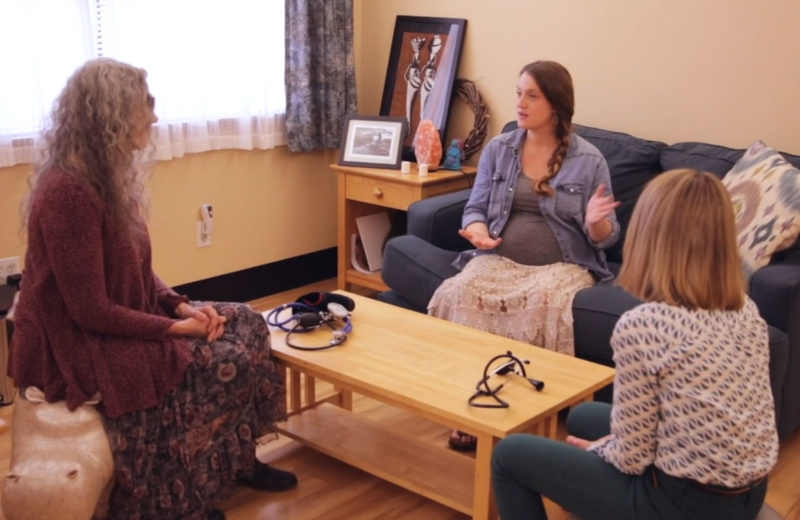
Adapted from her conversation with host Jessica Brumley, CNM, PhD, FACNM, on Discover Midwives with Jamie Swietlikowski, CNM, PMHNP, FACNM, founder of Perinatal Mental Health Partners.
When we talk about perinatal mental health, the conversation often begins with postpartum depression and anxiety: how to recognize symptoms and how to get help when something is wrong.
Those conversations are essential. But what if we started earlier?
Pregnancy, birth, and postpartum are major transitions, and for some people they can also be predictable periods of vulnerability for mental health. That gives us an opportunity to do more than respond to illness. We can talk about mental health while someone is well, understand their individual risk, and prepare for the transitions ahead.
You don’t have to wait until you’re struggling to talk about your mental health.
We already practice preventive care in pregnancy
Imagine that you enter pregnancy with epilepsy. Your medication is working, you haven’t had a seizure in years, and you’re doing well.
Your maternity care provider probably wouldn’t say, “Great. Let us know if you have a seizure.”
Instead, your care team would consider how pregnancy might affect your condition and treatment. You might meet with a specialist, review your medication, and make a plan.
Why shouldn’t we approach mental health the same way?
If you have a history of depression, anxiety, obsessive-compulsive disorder (OCD), bipolar disorder, trauma, or another mental health condition, feeling well today doesn’t make that history irrelevant. The same is true if you’ve experienced a postpartum mental health condition before, have a family history of psychiatric illness, or know there are times when your mental health has been particularly vulnerable.
The goal isn’t to assume that you will become ill. It’s to ask: What has kept you well? When might you be more vulnerable? And what can we put in place now to support your wellness?
Sometimes prevention means making a plan
Preventive mental health care doesn’t necessarily mean more treatment. Sometimes it means having an early conversation with someone who understands perinatal mental health and thinking ahead about pregnancy, birth, and postpartum.
I often create emotional well-being plans with patients, much like we create birth plans. We look at what has helped you stay well, how your particular mental health condition or vulnerabilities might show up during birth or postpartum, and where there may be predictable challenges. Then we ask: What preventive and supportive strategies can we put in place now to reduce those risks and support your emotional well-being?
There is another benefit to having this conversation early: you establish care.
If symptoms develop later, you aren’t starting from zero. Someone already knows your history and the plan. And if you never need to go back? That’s a success, too.
What about psychiatric medication?
Medication can be one of the hardest parts of conversations about pregnancy and mental health.
These decisions aren’t simply about whether a pregnancy is exposed to a medication. We also have to consider the effects of an untreated or undertreated psychiatric condition.
There isn’t one medication answer that’s right for everyone. What has worked for you before, your diagnosis and history, and the specific medication all matter. When medication is needed, the goal is generally the lowest effective dose, not simply the lowest dose.
Pregnancy can also change how the body handles some medications, so treatment may need to be reassessed as pregnancy progresses. If you take psychiatric medication and are pregnant or considering pregnancy, talk with your prescribing clinician before making changes. More complex questions may benefit from consultation with someone who has specialized expertise in reproductive or perinatal mental health.
Mental health care can’t solve everything
Sometimes what makes the perinatal period difficult isn’t something we can—or should—try to treat away. A parent may be getting up throughout the night with a newborn, returning to work without adequate leave, struggling to find affordable childcare, or trying to manage without enough support.
That doesn’t mean psychiatric illness isn’t real or that treatment isn’t important. It means we have to recognize when distress is being driven or intensified by the circumstances someone is living in.
Good treatment can’t prescribe away an impossible environment.
Sometimes supporting mental health means medication or therapy. Sometimes it means protecting sleep, increasing practical support, or helping someone access resources. And some of the biggest solutions—paid leave, affordable childcare, and accessible healthcare—require changes beyond the individual.
What if we brought the midwifery model to mental health?
This is where my two professional worlds—midwifery and reproductive mental health—come together.
When I talk about mental health midwifery, I don’t mean that every midwife should become a psychiatric provider.
I’m asking: What would it look like if we brought the principles of midwifery care to mental health?
Midwifery doesn’t begin when something goes wrong. It is grounded in relationship, prevention, education, informed decision-making, and respect for each person’s values and experiences. Midwives consider health in the context of someone’s family, community, and life. And when specialized expertise is needed, we collaborate with other members of the healthcare team.
We can approach mental health the same way.
Your midwife can talk with you about your mental health history even when you’re doing well. You can think together about what has kept you well, where you may be more vulnerable, and what supports you want in place for pregnancy, birth, and postpartum.
Sometimes that may also mean specialized mental health care—a therapist with expertise in perinatal mental health, a psychiatric clinician with specialized training in mental health during pregnancy and postpartum, or a reproductive psychiatrist.
The goal isn’t for your midwife to do everything. It’s for mental health to be part of your care from the beginning, with a clear way to get specialized care if you need it.
That’s mental health midwifery: bringing prevention, preparation, relationship, informed autonomy, collaboration, and whole-person care into the way we approach mental health.
Start the conversation
You don’t have to wait until you’re struggling—or wait for your maternity care provider to bring it up.
You might ask:
- “Is there anything in my mental health history we should think about during pregnancy or postpartum?”
- “Would it be helpful for me to meet with a perinatal mental health clinician even though I’m doing well?”
- “Can we make an emotional well-being plan for birth and postpartum?”
- “If I start struggling, who should I call?”
If you’re choosing a midwife, you can also ask how mental health is incorporated into their care and who they collaborate with when someone needs specialized support.
There is room in perinatal mental health care for wellness and prevention, for the normal emotional complexity of pregnancy and becoming a parent, and for psychiatric illness that deserves excellent, specialized treatment.
We don’t have to wait for illness to begin caring for mental health.
My hope is that mental health won’t feel like something separate that we introduce once someone becomes ill. It will simply be part of how we care for people throughout their reproductive lives.
You get to ask for more than “alive.”
If you need support now
If you’re struggling, tell your midwife, OB, primary care clinician, or mental health provider. You can also call or text the National Maternal Mental Health Hotline at 1-833-TLC-MAMA (1-833-852-6262) for free, confidential support 24/7. If you are in crisis or think you may harm yourself, call or text 988 or go to the nearest emergency department.
Hear the full conversation
In this episode of Discover Midwives, Jamie Swietlikowski talks with host Jessica Brumley about her path from midwifery to reproductive psychiatry, preventive perinatal mental health care, psychiatric medication during pregnancy, and what families need beyond the walls of the clinic.
Listen wherever you get your podcasts, and find a midwife in your community at midwife.org.
This episode of Discover Midwives was sponsored by Momcozy and Biogen. Thank you to our sponsors for supporting the podcast. Find links to their websites in the episode show notes.
Discover Midwives is brought to you by the American College of Nurse-Midwives.